LOST had many controversial elements. One was that so much of the criminal activity on and off the island was not punished. One could literally get away with mass murder.
In civilized society, the rule of law, a code of right and wrong, is necessary to stop the general public from turning into aggressive savages. In some ways, the island was its own uncivilized society where the normal rules did not apply to the characters.
It is possible to equate this element with a new scientific study which attempts to map "criminal intent" in the brain activity of potential criminals. In order to convict a person of a crime, the prosecution must prove mens rea, or the "intent" to commit the crime. It is done mostly by circumstantial evidence and common sense. For example, if you carry a gun into a store and demand money from the clerk, you are intending to rob the store. Judges and juries often have to gauge a defendant's mental state at the time he or she committed a crime in complex cases or where the defendant may have mental impairment. They have to decide whether a defendant committed a crime "knowingly" or "recklessly." In some cases, the difference could be a matter of life or death.
A recent study published in the Proceedings of the National Academy of Sciences, has turned to the brain to find a basis for this distinction. The researchers were able to find distinct brain activity patterns that revealed whether participants knew they were committing a (virtual) crime or were recklessly taking a risk.
“All the elements of the crime being the same, depending on which mental state the court decides that you were in when you committed the crime, you can get probation or 20 years in jail,” said the study co-author Read Montague, a neuroscientist at the Virginia Tech Carilion Research Institute. “I can't think of anything more important than loss of your liberty, so understanding these distinctions or the subtleties in them is important.”
For this study, 40 participants played a game inside a brain scanner. They had to decide to carry a suitcase that could contain sensitive documents through a maze where they could encounter one or more guards. The number of suitcases and the guards were altered in each round of the game to play with the level of risk the participants had to take.
The researchers used a machine-learning method of data analysis that looks at activity across the entire brain to find patterns. This revealed two activity patterns that corresponded to the conditions in which participants knowingly decided to carry a suitcase containing contraband, or the conditions where the participants made an uncertain but risky choice.
The distinct brain patterns they found suggest that these two legally defined mental states—knowing and reckless—are not arbitrary, but indeed map to different psychological states.
Montague is quick to point out that this study is not something you could use to avoid harsher punishment.
“It has no implications within a courtroom, and probably won't for quite a while,” Montague told mentalfloss.com “This is a proof-of-principle study that informs the idea of mental-state distinctions.”
In fact, what neuroscience in general could potentially offer in a courtroom is heavily debated.
Our relatively recent ability to scan the brain and look for otherwise undetectable injuries has raised the idea that neuroscience could be used to inform the circumstances of a criminal case. If you have a brain lesion, after all, your behavior could be profoundly affected.
Taking this scientific study to the LOST world, Dharma was interested in various aspects of brain activity. From manipulation to brain washing, Dharma and Ben used methods to control the Others and the survivors. But it is unknown whether the original Dharma researchers had more civil aspects to their experiments such as finding clues to criminal behavior through tests and brain scans.
In order to get samples from various types of people, it makes sense for the island scientists to bring various people to the island and let the boundaries of civilized society be negated in a new world where basic survival is the only thing that matters. Call it a grand experiment to determine how normal people react in an abnormal environment. And if it was an experiment on how humanity is changed under those circumstances, it would appear the verdict would be that normal people mostly fail both their own moral codes with increased criminal behavior.
Showing posts with label crime. Show all posts
Showing posts with label crime. Show all posts
Monday, March 20, 2017
Monday, February 15, 2016
HARD DRIVE
The human brain is the most complex organ in the body. Scientists still do not fully understand how it operates; how it can capture images, store them and recall them as vivid memories. Some believe that the brain works like a computer hard drive, in which proteins that bond to neurons communicate and store information. The body's program code may be at an atomic level which would be exponentially greater than the largest and faster computer systems on the planet.
To equate the brain with a computer hard drive is a good comparison. But what happens when a brain misfires? Is it like a crashing hard drive? When information in a computer hard drive is fragmented, the bytes of information are dispersed on various parts of the drive - - - to be sewed back together by the operating code to be then displayed on the screen. In the human brain, when its information and recall gets fragmented, we call it a form of mental illness or disease.
Multiple personality disorders include hallucinations, paranoia, violent behavior, illusions and illogical actions. Those traits were found in many of the main characters in LOST.
One can take the hard drive theory for the show and break it down into differing premises. First, the show could have been a large, on-line multiplayer, role game of Survivor which had its main server programming break down into a different kind of game. Add the component of augmented or virtual reality, the players (characters) could have been so absorbed into the game that it turned into their new reality. Some addictive personalities could then have been trapped in this virtual world.
Second, the premise could be a metaphor that the main characters brains were malfunctioning like a crashed drive. There are many examples of characters shown with mental illness (Hurley and Libby), mental breakdowns and suicidal thoughts (Jack and Locke), murder (Ben, Sawyer, Kate), torture (Sayid and Ben), and even justified homicide (Bernard, Hurley).
There seems to be a great deal of violent criminal behavior as the undercurrent of the series.
The bonds between these main characters could reflect that they were brought to a place collectively in order to protect the rest of the world from them. This idea would fit into the statements by Jacob that he alone brought people to the island. And the fact that MIB was called a "security" system, it would seem they would symbolize a warden and a guard in a prison.
The people brought to the island were not candidates but prisoners. Perhaps it was found that each of the main characters had dangerous mental traits that could trigger abhorrent behavior in the real world. So the authorities ditched them on a private, secluded, high security island to test new penal rehabilitation techniques.
What happened on the island would confirm the authorities worst fears about some of the prisoners. There were violent episodes, Some people changed and went crazy (Claire), others went psychopathic (Ben). Without the structure of prison cells, the inmates ran the asylum.
Which is fine. The prison revolt was orchestrated by the prison guard (MIB) who was fed up with the warden and his games. MIB needed help from the inmates in order to escape the island. But it seems that the only true escape from the island is death.
Third, you can combine the two theories into one in the respect that this prison escape adventure is being a transformative hallucination of a criminal mental patient. The vivid illusions drawn upon the stories of other inmates in therapy sessions can be the building blocks for the action, the escapism, for a person who is serving a life sentence without parole. And the dream aspect could be confirmed by the "happy" ending for the inmates in heaven - - - which is very odd since all their misbehavior, crimes and sins all "vanish" once they leave the island. This is odd finish - - - except that is the fantasy outcome for someone who has committed vile acts without comprehension or accountability or guilt. The dreamers miswired brain allows him or her the fantasy of justification, free will and acceptance by his or her fellow rogues and misfits.
To equate the brain with a computer hard drive is a good comparison. But what happens when a brain misfires? Is it like a crashing hard drive? When information in a computer hard drive is fragmented, the bytes of information are dispersed on various parts of the drive - - - to be sewed back together by the operating code to be then displayed on the screen. In the human brain, when its information and recall gets fragmented, we call it a form of mental illness or disease.
Multiple personality disorders include hallucinations, paranoia, violent behavior, illusions and illogical actions. Those traits were found in many of the main characters in LOST.
One can take the hard drive theory for the show and break it down into differing premises. First, the show could have been a large, on-line multiplayer, role game of Survivor which had its main server programming break down into a different kind of game. Add the component of augmented or virtual reality, the players (characters) could have been so absorbed into the game that it turned into their new reality. Some addictive personalities could then have been trapped in this virtual world.
Second, the premise could be a metaphor that the main characters brains were malfunctioning like a crashed drive. There are many examples of characters shown with mental illness (Hurley and Libby), mental breakdowns and suicidal thoughts (Jack and Locke), murder (Ben, Sawyer, Kate), torture (Sayid and Ben), and even justified homicide (Bernard, Hurley).
There seems to be a great deal of violent criminal behavior as the undercurrent of the series.
The bonds between these main characters could reflect that they were brought to a place collectively in order to protect the rest of the world from them. This idea would fit into the statements by Jacob that he alone brought people to the island. And the fact that MIB was called a "security" system, it would seem they would symbolize a warden and a guard in a prison.
The people brought to the island were not candidates but prisoners. Perhaps it was found that each of the main characters had dangerous mental traits that could trigger abhorrent behavior in the real world. So the authorities ditched them on a private, secluded, high security island to test new penal rehabilitation techniques.
What happened on the island would confirm the authorities worst fears about some of the prisoners. There were violent episodes, Some people changed and went crazy (Claire), others went psychopathic (Ben). Without the structure of prison cells, the inmates ran the asylum.
Which is fine. The prison revolt was orchestrated by the prison guard (MIB) who was fed up with the warden and his games. MIB needed help from the inmates in order to escape the island. But it seems that the only true escape from the island is death.
Third, you can combine the two theories into one in the respect that this prison escape adventure is being a transformative hallucination of a criminal mental patient. The vivid illusions drawn upon the stories of other inmates in therapy sessions can be the building blocks for the action, the escapism, for a person who is serving a life sentence without parole. And the dream aspect could be confirmed by the "happy" ending for the inmates in heaven - - - which is very odd since all their misbehavior, crimes and sins all "vanish" once they leave the island. This is odd finish - - - except that is the fantasy outcome for someone who has committed vile acts without comprehension or accountability or guilt. The dreamers miswired brain allows him or her the fantasy of justification, free will and acceptance by his or her fellow rogues and misfits.

Monday, August 31, 2015
FOR THE LOVE OF CRIME
It's a different kind of fatal attraction.
Hybristophilia is a term used by
criminologists -- but not scientists -- to describe a sexual attraction
to violent killers in prison, who often receive racy love letters or
sexy undergarments from their fans.
Also known as the "Bonnie and Clyde syndrome," it has existed throughout time and across borders.
Norway's most famous mass murderer gets hundreds of fan letters from lovelorn women, including marriage proposals. Charles Manson had his cult following, even in prison.
Why some women are attracted to "the bad boy" persona baffles normal men.
Perhaps, due to societal pressures and expectations, women have to repress their desires for freedom and adventure. They seek to find fulfillment with "exciting" men who appear to be the rebellious answer to their conservative peer pressures. It also may a motherly adaptation of the theme of trying to change a bad man into a good one.
So who were the "bad boys" of LOST?
Sawyer, the charming con man, clearly used his image and talents to find women falling over him. Even after the con, some women still adored him. The women who fell for him were usually those lonely housewives that lacked a spark of excitement in their marriages, or had self-worth issues that could be solved with a "big financial score." However, Kate was clearly drawn to Sawyer because they shared a same reckless, self-first survival mode.
Ben was a sociopath, a mass murderer. In the show, he had no girlfriend. He tried to impose his will on the women in the compound, but his tyranny did not evoke any connection with women in the camp. However, in fan groups, there were several women who adored Ben's character, which may be closer to the Bonnie and Clyde syndrone mentioned above. Women could be attracted to such a bad character because Ben was not a real person in their lives, much as a prisoner in a life sentence without parole could never be part of the real lives. It is that real barrier that allows the fantasy connection to be expressed by these women.
Jacob may have also been a sociopath. He brought people to the island as candidates, only to have almost all of the candidates perish. He played games with human lives. But he was also a loner. We never saw any connection to anyone, except his Crazy Mother (also a sociopath) and his estranged brother. In an odd way, perhaps Jacob's game of bringing people to the island was a means of combating his loneliness, or a weak attempt to attract someone he could truly love. The mystery of Jacob did spawn a group of followers, including women in the Others camp. But it seems that Jacob never acted upon his cult followers in any way to allow them to meet or interact with him in a human way. Even in Greek stories, the gods would at times come to Earth to mingle, tease, and procreate with interior humans, usually to invoke the wrath of higher gods.
Friday, August 14, 2015
SOCIAL DEATH
In 1993, social psychologist Craig Haney began studying the effects of solitary confinement at Pelican Bay State
Prison in California, one of the first "super-max" prisons in the
country.
Twenty years later, he went back to gather more information — and found many of the same inmates still suffering alone in their cells.
"It was shocking, frankly," Haney, a professor in the psychology department at the University of California Santa Cruz, recently told The New York Times.
Despite not being peer reviewed as a formal study yet, Haney's interviewed of 56 prisoners, all of whom spent between 10 and 28 years in solitary confinement.
The results provide the most comprehensive look at the effects of long-term solitary confinement yet, according to the Times.
An estimated 75,000 prisoners across the US live in Special Housing Units, also known as the SHU — what the Federal Bureau of Prisons calls solitary confinement. There, they spend up to 23 hours locked in cells often no larger than the span of their outstretched arms with little to no interaction with others.
During their few precious hours free from bars, they shower, exercise, and tend to their medical needs, still often alone.
In such extreme isolation for years, the prisoners Haney interviewed at Pelican Bay experienced what he calls a "social death."
“They were grieving for their lost lives, for their loss of connectedness to the social world and their families outside, and also for their lost selves,” Haney told the Times. “Most of them really did understand that they had lost who they were, and weren’t sure of who they had become."
The inmates describe the experience much more viscerally.
One compared Pelican Bay's solitary confinement wing to "a weapons labs or a place for human experiments," the Times reported. Another admitted he imagines his family watching TV with him and talks to them.
"Maybe I'm crazy, but it makes me feel like I'm with them," the inmate told Haney, according to the Times.
Yet another had considered begging a judge for the death penalty.
In 1993, the inmates Haney interviewed reported high rates of psychiatric issues, like depression and irrational anger and even confusion and dizziness.
When Haney returned to Pelican Bay in 2013, according to the Times, the prisoner's conditions hadn't improved.
Sixty-three percent of the inmates in solitary for more than 10 years told Haney they felt near an "impending breakdown," the Times reported.
By contrast, only 4% of the regular inmates at the maximum security facility described themselves in the same manner. And 73% of solitary prisoners reported being chronically depressed, compared to 48% of maximum-security inmates.
Prolonged depression has been linked to the shrinkage of the brain's hippocampus, an area of the brain that helps us form new memories, process long-term memories, and link emotions to those memories.
Ian Hickie, the co-director of the University of Sydney’s Brain and Mind Research Institute, helped lead the largest international study comparing brain volumes in people with and without major depression. The study, published in June 2015, found that "more episodes of depression a person had, the greater the reduction in hippocampus size," he told The Guardian newspaper.
Aside from depression, the lack of physical activity, social interaction, or natural sunlight in solitary would likely be enough to cause a person harm, explained, Haney. "Each one is sufficient enough to change the brain and change it dramatically, whether it is brief or extended. And when I say extended, I mean days, not decades," he said.
While these studies show that isolation in a prison setting can cause severe mental and emotional problems, when we examine LOST's foundational story lines that have the basis in severe emotional and mental issues, one can see a link between the two.
Isolation does not have to come from prison confinement. At times, people create their own prisons. They withdraw from the world; hide in their own homes; remove contact with friends and family members. In such a situation, their mind preys upon their anxieties, fears, phobias and disillusions about how bad their life has become because of X, Y or Z reasons.
Normal human beings live life. They work, try, fail, learn and try again. But those people trapped in their own mental prisons create the illusion of a real life because they cannot experience a real one. And this illusion based on past memories can be as vivid as reality itself.
So, even non-institutional people can create their own "social death." People are grieving for their lost lives, for their loss of connectedness to the social world and their families outside, and also for their lost selves. That sounds like the foundational story engine for the LOST series.
Twenty years later, he went back to gather more information — and found many of the same inmates still suffering alone in their cells.
"It was shocking, frankly," Haney, a professor in the psychology department at the University of California Santa Cruz, recently told The New York Times.
Despite not being peer reviewed as a formal study yet, Haney's interviewed of 56 prisoners, all of whom spent between 10 and 28 years in solitary confinement.
The results provide the most comprehensive look at the effects of long-term solitary confinement yet, according to the Times.
An estimated 75,000 prisoners across the US live in Special Housing Units, also known as the SHU — what the Federal Bureau of Prisons calls solitary confinement. There, they spend up to 23 hours locked in cells often no larger than the span of their outstretched arms with little to no interaction with others.
During their few precious hours free from bars, they shower, exercise, and tend to their medical needs, still often alone.
In such extreme isolation for years, the prisoners Haney interviewed at Pelican Bay experienced what he calls a "social death."
“They were grieving for their lost lives, for their loss of connectedness to the social world and their families outside, and also for their lost selves,” Haney told the Times. “Most of them really did understand that they had lost who they were, and weren’t sure of who they had become."
The inmates describe the experience much more viscerally.
One compared Pelican Bay's solitary confinement wing to "a weapons labs or a place for human experiments," the Times reported. Another admitted he imagines his family watching TV with him and talks to them.
"Maybe I'm crazy, but it makes me feel like I'm with them," the inmate told Haney, according to the Times.
Yet another had considered begging a judge for the death penalty.
In 1993, the inmates Haney interviewed reported high rates of psychiatric issues, like depression and irrational anger and even confusion and dizziness.
When Haney returned to Pelican Bay in 2013, according to the Times, the prisoner's conditions hadn't improved.
Sixty-three percent of the inmates in solitary for more than 10 years told Haney they felt near an "impending breakdown," the Times reported.
By contrast, only 4% of the regular inmates at the maximum security facility described themselves in the same manner. And 73% of solitary prisoners reported being chronically depressed, compared to 48% of maximum-security inmates.
Prolonged depression has been linked to the shrinkage of the brain's hippocampus, an area of the brain that helps us form new memories, process long-term memories, and link emotions to those memories.
Ian Hickie, the co-director of the University of Sydney’s Brain and Mind Research Institute, helped lead the largest international study comparing brain volumes in people with and without major depression. The study, published in June 2015, found that "more episodes of depression a person had, the greater the reduction in hippocampus size," he told The Guardian newspaper.
Aside from depression, the lack of physical activity, social interaction, or natural sunlight in solitary would likely be enough to cause a person harm, explained, Haney. "Each one is sufficient enough to change the brain and change it dramatically, whether it is brief or extended. And when I say extended, I mean days, not decades," he said.
While these studies show that isolation in a prison setting can cause severe mental and emotional problems, when we examine LOST's foundational story lines that have the basis in severe emotional and mental issues, one can see a link between the two.
Isolation does not have to come from prison confinement. At times, people create their own prisons. They withdraw from the world; hide in their own homes; remove contact with friends and family members. In such a situation, their mind preys upon their anxieties, fears, phobias and disillusions about how bad their life has become because of X, Y or Z reasons.
Normal human beings live life. They work, try, fail, learn and try again. But those people trapped in their own mental prisons create the illusion of a real life because they cannot experience a real one. And this illusion based on past memories can be as vivid as reality itself.
So, even non-institutional people can create their own "social death." People are grieving for their lost lives, for their loss of connectedness to the social world and their families outside, and also for their lost selves. That sounds like the foundational story engine for the LOST series.
Tuesday, March 31, 2015
THE TRUE RELATIONSHIP
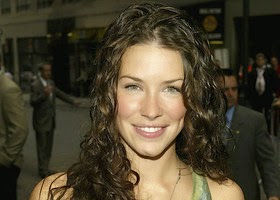
There are a few key components that bring men and women together.
Attraction tops the key element list. Physical attraction is the first cue because it is the first thing a person sees in another person. The outward appearance of a potential mate is an evolutionary mental instinct that overrides logic or intelligence. It can be the unspoken bond - - - the initial deep eye contact which some writers call the gateway to another person's soul.
Compatibility is another element. One can be physically attracted to another person, but if the couple does not share mutual interests, have similar morals, have similar goals in life - - - or nothing of substance to talk about - - - their relationship will have a weak foundation. There are some people who get together just for the sexual passion of being with another person with no long term commitment or expectations.
Respect and trust is another element that comes with time. A couple needs to have sufficient time to get to know each other. At a certain point, a person will let down their personal "guard," the space or barrier that keeps outsiders away from that person's inner secrets and desires. Once a person has the respect and trust of another, there is an inherit measure of safety and security that helps cement a true bond of friendship.
Friendship is another key element. Friendship is defined as the the emotions or conduct of friends; a closeness between friends; and a state of mutual trust and support between people. There is an odd split when it comes to friendship. Some believe experience teaches us that lovers can become friends while there is a barrier that friends cannot become lovers. Whether that concept was placed in small human villages as a means of stopping fights between males is better left to an anthropologist's thesis. But in our modern world, there is no reason why men and women who have a true bond of friendship could bloom into lovers.
For the happiest couples often say that their mate is "their best friend." The person who supports them, helps them make decisions, shares life experiences, and is there for the good times and the bad times.
Perhaps that is why many viewers could not see Kate winding up with Jack at the end of LOST. The traditional means of love were backward in their relationship.
The male audience was smitten with Kate when she first appeared on camera. She was the perky, cute, American girl-next-door icon. She was feisty, reckless, witty, and fun. Men were immediately attracted to her. And Kate knew this; she used her charms to her advantage to control men - - - from getting them close to pushing them away.
When she had her quick affair with Sawyer, it was animal lust as they were caged at the Dharma research facility. Both of them never had had a lasting relationship; they used people to their advantage in a cold, con-artist manner. Some believe Kate's actions with Sawyer was only to get Jack to save Ben (the deal she made on the beach) by forsaking any feelings towards her (such as protecting her against the Others). But Kate's relationship continued with Sawyer in the beach camp until she got to close to his secrets (the letter he wrote as a child). As such, Sawyer and Kate split.
Throughout the jungle missions, Kate was always in the background supporting Jack. There were only a few times she sided with some one else, like Locke, but overall Jack could "count" on her. But there was always a hint of trust issues. Jack knew her criminal secret, but he did not care since he believed (rightly so) that the island was a chance for everyone to start fresh with a new beginning.
Relationships are new beginnings. It is an opportunity to discard the past, learn from one's mistakes, and look for the traits that will bring out the best traits in yourself and in your partner.
So when you look at Kate sitting next to Jack in the sideways church, one could think they were never meant for each other but on the other hand their island experience and friendship was so intense and strong that deserved to wind up together.
Sunday, March 8, 2015
THE POWER OF SUGGESTION
In a recent New Yorker article, the power of suggestion is examined and its results are somewhat startling to the average mind.
The power of suggestion is not new. In 1906, Hugo Münsterberg, the chair of the psychology laboratory at Harvard University and the president of the American Psychological Association, wrote in the Times Magazine about a false confession case. A woman had been found dead in Chicago, garroted with a copper wire and left in a barnyard, and the simpleminded farmer’s son who had discovered her body stood accused. The young man had an alibi, but after questioning by police he admitted to the murder. He did not simply confess, Münsterberg wrote; “he was quite willing to repeat his confession again and again. Each time it became richer in detail.” The young man’s account, he continued, was “absurd and contradictory,” a clear instance of “the involuntary elaboration of a suggestion” from his interrogators. Münsterberg cited the Salem witch trials, in which similarly vulnerable people were coerced into self-incrimination. He shared his opinion in a letter to a Chicago nerve specialist, which made the local press. A week later, the farmer’s son was hanged.
It would take decades before the legal and psychological communities began to understand how powerfully suggestion can shape memory and, in turn, the course of justice. In the early nineteen-nineties, American society was recuperating from another panic over occult influence; Satanists had replaced witches. One case, the McMartin Preschool trial, hinged on nine young victims’ memories of molestation and ritual abuse—memories that they had supposedly forgotten and then, after being interviewed, recovered. The case fell apart, in 1990, because the prosecution could produce no persuasive evidence of the victims’ claims. A cognitive psychologist named Elizabeth Loftus, who had consulted on the case, wondered whether the children’s memories might have been fabricated—in Münsterberg’s formulation, involuntarily elaborated—rather than actually recovered.
To test her theory, Loftus gave a group of volunteers the rudimentary outlines of a childhood experience: getting lost in a mall and being rescued by a kindly adult. She told the subjects, falsely, that the scenario was real and had taken place when they were young. (For verisimilitude, Loftus asked their parents for biographical details that she could plant in each story.) Then she debriefed the subjects twice, with the interviews separated by one or two weeks. By the second interview, six of the twenty-four test subjects had internalized the story, weaving in sensory and emotional details of their own. Loftus and other researchers have since used similar techniques to create false memories of near-drownings, animal attacks, and encounters with Bugs Bunny at Disneyland (impossible, since Bugs is a Warner Bros. character).
Earlier this year, two forensic psychologists—Julia Shaw, of the University of Bedfordshire, and Stephen Porter, of the University of British Columbia—upped the ante. Writing in the January issue of the journal Psychological Science, they described a false memory method, not of getting lost in childhood but of committing a crime in adolescence. They modeled their work on Loftus’s, sending questionnaires to each of their participant’s parents to gather background information. (Any past run-ins with the law would eliminate a student from the study.) Then they divided the students into two groups and told each a different kind of false story. One group was prompted to remember an emotional event, such as getting attacked by a dog. The other was prompted to remember a crime—an assault, for example—that led to an encounter with the police. At no time during the experiments were the participants allowed to communicate with their parents.
What Shaw and Porter found astonished them. “We thought we’d have something like a thirty-per-cent success rate, and we ended up having over seventy,” Shaw told me. “We only had a handful of people who didn’t believe us.” After three debriefing sessions, seventy-six per cent of the students claimed to remember the false emotional event; nearly the same amount—seventy per cent—remembered the fictional crime. Shaw and Porter hadn’t put undue stress on the students; in fact, they had treated them in a friendly way. All it took was a suggestion from an authoritative source, and the subjects’ imaginations did the rest. The students seemed almost eager to self-incriminate.
One young woman spun a story about a kind of love triangle. In the first debriefing, she remembered the incident as a fistfight between her and another girl. In the second, she remembered having thrown a small rock at her adversary after the girl uttered a slur. By the third debriefing, the rock had grown to the size of her fist and she had hurled it at the girl’s face. “It was very emotional,” Shaw said. “Each time she’d reënact the event, the rock would fill her hand a little bit more.” Nothing in the woman’s affect suggested that the memory was false. She earnestly believed in the truth of her confession, as most of her fellow-participants did theirs. The memory was vivid, loaded with details about the crime that the interviewer had not furnished. Moreover, Shaw and Porter could find no personality traits that distinguished the false confessors from the few holdouts, and no way of identifying who was most susceptible.
Researchers conclude that these are troubling findings. They mimic, in the gentlest way, what can happen during police questioning: a small lie, told to shake loose the truth, rattles around in a suspect’s imagination and takes root. The psychologist Saul Kassin has studied interrogation and false confession for decades. He told me that Shaw and Porter’s experiment illustrates perfectly how social pressure can make innocent people admit to wrongdoing. “Think about the dilemma the suspect now faces: ‘I don’t have a memory for this, but the person who took care of me does. Therefore it must be true and I have to find a way to remember it.’ ”
After reading this article, this is another plausible premise to the LOST saga. As the plot started, we were on a fairly straight and narrow crash survival tale, but over the course of time, it moved off into very different, strange tangents unrelated to the initial premise. It is like minor suggestions were being conjured and amplified in a person's mind - - - creating a roller coaster of self-importance to criminal behavior memories. A theory is that LOST was the creation within some character's mind.
The power of suggestion is not new. In 1906, Hugo Münsterberg, the chair of the psychology laboratory at Harvard University and the president of the American Psychological Association, wrote in the Times Magazine about a false confession case. A woman had been found dead in Chicago, garroted with a copper wire and left in a barnyard, and the simpleminded farmer’s son who had discovered her body stood accused. The young man had an alibi, but after questioning by police he admitted to the murder. He did not simply confess, Münsterberg wrote; “he was quite willing to repeat his confession again and again. Each time it became richer in detail.” The young man’s account, he continued, was “absurd and contradictory,” a clear instance of “the involuntary elaboration of a suggestion” from his interrogators. Münsterberg cited the Salem witch trials, in which similarly vulnerable people were coerced into self-incrimination. He shared his opinion in a letter to a Chicago nerve specialist, which made the local press. A week later, the farmer’s son was hanged.
It would take decades before the legal and psychological communities began to understand how powerfully suggestion can shape memory and, in turn, the course of justice. In the early nineteen-nineties, American society was recuperating from another panic over occult influence; Satanists had replaced witches. One case, the McMartin Preschool trial, hinged on nine young victims’ memories of molestation and ritual abuse—memories that they had supposedly forgotten and then, after being interviewed, recovered. The case fell apart, in 1990, because the prosecution could produce no persuasive evidence of the victims’ claims. A cognitive psychologist named Elizabeth Loftus, who had consulted on the case, wondered whether the children’s memories might have been fabricated—in Münsterberg’s formulation, involuntarily elaborated—rather than actually recovered.
To test her theory, Loftus gave a group of volunteers the rudimentary outlines of a childhood experience: getting lost in a mall and being rescued by a kindly adult. She told the subjects, falsely, that the scenario was real and had taken place when they were young. (For verisimilitude, Loftus asked their parents for biographical details that she could plant in each story.) Then she debriefed the subjects twice, with the interviews separated by one or two weeks. By the second interview, six of the twenty-four test subjects had internalized the story, weaving in sensory and emotional details of their own. Loftus and other researchers have since used similar techniques to create false memories of near-drownings, animal attacks, and encounters with Bugs Bunny at Disneyland (impossible, since Bugs is a Warner Bros. character).
Earlier this year, two forensic psychologists—Julia Shaw, of the University of Bedfordshire, and Stephen Porter, of the University of British Columbia—upped the ante. Writing in the January issue of the journal Psychological Science, they described a false memory method, not of getting lost in childhood but of committing a crime in adolescence. They modeled their work on Loftus’s, sending questionnaires to each of their participant’s parents to gather background information. (Any past run-ins with the law would eliminate a student from the study.) Then they divided the students into two groups and told each a different kind of false story. One group was prompted to remember an emotional event, such as getting attacked by a dog. The other was prompted to remember a crime—an assault, for example—that led to an encounter with the police. At no time during the experiments were the participants allowed to communicate with their parents.
What Shaw and Porter found astonished them. “We thought we’d have something like a thirty-per-cent success rate, and we ended up having over seventy,” Shaw told me. “We only had a handful of people who didn’t believe us.” After three debriefing sessions, seventy-six per cent of the students claimed to remember the false emotional event; nearly the same amount—seventy per cent—remembered the fictional crime. Shaw and Porter hadn’t put undue stress on the students; in fact, they had treated them in a friendly way. All it took was a suggestion from an authoritative source, and the subjects’ imaginations did the rest. The students seemed almost eager to self-incriminate.
One young woman spun a story about a kind of love triangle. In the first debriefing, she remembered the incident as a fistfight between her and another girl. In the second, she remembered having thrown a small rock at her adversary after the girl uttered a slur. By the third debriefing, the rock had grown to the size of her fist and she had hurled it at the girl’s face. “It was very emotional,” Shaw said. “Each time she’d reënact the event, the rock would fill her hand a little bit more.” Nothing in the woman’s affect suggested that the memory was false. She earnestly believed in the truth of her confession, as most of her fellow-participants did theirs. The memory was vivid, loaded with details about the crime that the interviewer had not furnished. Moreover, Shaw and Porter could find no personality traits that distinguished the false confessors from the few holdouts, and no way of identifying who was most susceptible.
Researchers conclude that these are troubling findings. They mimic, in the gentlest way, what can happen during police questioning: a small lie, told to shake loose the truth, rattles around in a suspect’s imagination and takes root. The psychologist Saul Kassin has studied interrogation and false confession for decades. He told me that Shaw and Porter’s experiment illustrates perfectly how social pressure can make innocent people admit to wrongdoing. “Think about the dilemma the suspect now faces: ‘I don’t have a memory for this, but the person who took care of me does. Therefore it must be true and I have to find a way to remember it.’ ”
After reading this article, this is another plausible premise to the LOST saga. As the plot started, we were on a fairly straight and narrow crash survival tale, but over the course of time, it moved off into very different, strange tangents unrelated to the initial premise. It is like minor suggestions were being conjured and amplified in a person's mind - - - creating a roller coaster of self-importance to criminal behavior memories. A theory is that LOST was the creation within some character's mind.
Subscribe to:
Posts (Atom)