In the past weeks, Hollywood's dirty open secret of sexual harassment by powerful men has led to a landslide of resignations and terminations. The casting couch mentality is still prevalent in the entertainment industry. It is not exclusive to the United States as many stories are surfacing in South Korea about directors abusing actresses with non-agreed sex scenes in productions.
Sexism is a prejudice, stereotyping, or discrimination, typically against women, on the basis of sex. This happens frequently in the choices producers make in casting and developing series.
In LOST, the character of Kate Austen was supposed to be the main focal point. She was the one with the troubled background who would become the leader of the 815 survivors. It would have been interesting to see her use her charms to manipulate the male characters to do her bidding (like she did in her flashback crime sprees). In some ways, her character could have been on a parallel track with that of Ben.
But after shooting the pilot, the producers dramatically changed direction. Jack Shephard, the good looking, caring doctor was supposed to be killed to show the "reality" and danger that the island posed to the survivors. But since Matthew Fox had a previous network series with some fan following, the producers decided to make him the lead character instead of newcomer Evangeline Lilly.
It is not that a female character could not lead a network series. For seven seasons, an actress led the crew of Star Trek Voyager on a dangerous quest to return home from the Delta Quadrant. Kate Mulgrew, a stage actress, could command the center stage of the bridge. She could be tough, decisive and kind or introspective during an episode. No viewer questioned her competency as captain because she was a woman.
The leader of a star ship or band of castaways on a remote island controls how a series can unfold its stories. It can show more growth from an underdog character such as a small town woman in Kate who has to learn on the job, balance the inequities and fight the demons of prior prejudices against her. Jack's character had already garnered respect as a talented surgeon from his colleagues and patients. He was used to being in charge of a group in the operating room. His growth as an island leader would not be as great as it would have with Kate.
LOST could have been a totally different series if the original plan of Kate was the 815 leader instead of her secondary role as being a supporter of whatever man she needed to use to continue her own personal survival.
Showing posts with label women. Show all posts
Showing posts with label women. Show all posts
Sunday, October 29, 2017
Tuesday, March 31, 2015
THE TRUE RELATIONSHIP
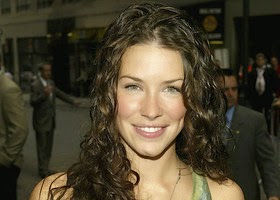
There are a few key components that bring men and women together.
Attraction tops the key element list. Physical attraction is the first cue because it is the first thing a person sees in another person. The outward appearance of a potential mate is an evolutionary mental instinct that overrides logic or intelligence. It can be the unspoken bond - - - the initial deep eye contact which some writers call the gateway to another person's soul.
Compatibility is another element. One can be physically attracted to another person, but if the couple does not share mutual interests, have similar morals, have similar goals in life - - - or nothing of substance to talk about - - - their relationship will have a weak foundation. There are some people who get together just for the sexual passion of being with another person with no long term commitment or expectations.
Respect and trust is another element that comes with time. A couple needs to have sufficient time to get to know each other. At a certain point, a person will let down their personal "guard," the space or barrier that keeps outsiders away from that person's inner secrets and desires. Once a person has the respect and trust of another, there is an inherit measure of safety and security that helps cement a true bond of friendship.
Friendship is another key element. Friendship is defined as the the emotions or conduct of friends; a closeness between friends; and a state of mutual trust and support between people. There is an odd split when it comes to friendship. Some believe experience teaches us that lovers can become friends while there is a barrier that friends cannot become lovers. Whether that concept was placed in small human villages as a means of stopping fights between males is better left to an anthropologist's thesis. But in our modern world, there is no reason why men and women who have a true bond of friendship could bloom into lovers.
For the happiest couples often say that their mate is "their best friend." The person who supports them, helps them make decisions, shares life experiences, and is there for the good times and the bad times.
Perhaps that is why many viewers could not see Kate winding up with Jack at the end of LOST. The traditional means of love were backward in their relationship.
The male audience was smitten with Kate when she first appeared on camera. She was the perky, cute, American girl-next-door icon. She was feisty, reckless, witty, and fun. Men were immediately attracted to her. And Kate knew this; she used her charms to her advantage to control men - - - from getting them close to pushing them away.
When she had her quick affair with Sawyer, it was animal lust as they were caged at the Dharma research facility. Both of them never had had a lasting relationship; they used people to their advantage in a cold, con-artist manner. Some believe Kate's actions with Sawyer was only to get Jack to save Ben (the deal she made on the beach) by forsaking any feelings towards her (such as protecting her against the Others). But Kate's relationship continued with Sawyer in the beach camp until she got to close to his secrets (the letter he wrote as a child). As such, Sawyer and Kate split.
Throughout the jungle missions, Kate was always in the background supporting Jack. There were only a few times she sided with some one else, like Locke, but overall Jack could "count" on her. But there was always a hint of trust issues. Jack knew her criminal secret, but he did not care since he believed (rightly so) that the island was a chance for everyone to start fresh with a new beginning.
Relationships are new beginnings. It is an opportunity to discard the past, learn from one's mistakes, and look for the traits that will bring out the best traits in yourself and in your partner.
So when you look at Kate sitting next to Jack in the sideways church, one could think they were never meant for each other but on the other hand their island experience and friendship was so intense and strong that deserved to wind up together.

Wednesday, July 23, 2014
PREGNANCIES
One of the early serious plot lines revolved around the danger of pregnant women on the island. They all died before giving birth. This was a serious story line, repeated twice in the show: first with Claire and her abduction, and second with Sun's "miracle" conception. (There is major flaw in the sideways arc that both women who gave birth in the island time-sphere gave birth to their daughters in the sideways after life.)
The reason why pregnant women died on the Island before they could successfully give birth was vaguely couched as an "infection." People, especially pregnant women, had to have shots in order to save themselves and their babies. But the cause was never explained. Ben kidnapped Juliet to have her investigate the island birth problem because she successfully got her infertile sister pregnant. Juliet was supposed to solve the problem, but did not. There was some aspect of the pregnancies that may have been tied to fetus "time skipping," but that was actually before the FDW was introduced as a deux machina device.
In Season 1 when Claire was pregnant with Aaron and got kidnapped and experimented on by Ethan, was a member of The Others who had a focus on children. They would later kidnap the tail section children. Ethan was likely working with Juliet to help Claire – he gave her injections, but those cause strange pyschotropic events in Claire's mind. Claire was rescued Aaron was born on the island (something that was not supposed to happen). One explanation is that it was likely Aaron born on the Island without incident because Claire was already far enough along in her pregnancy before coming to the Island (just like Jacob and the Man In Black’s mother).
However, the pregnancy issue popped up again in Season 3 when Sun learned that she was pregnant (“The Glass Ballerina” & “D.O.C.” ) and was a the prominent focus of Juliet’s flashback arch (“One of Us“). If Sun conceived on the island, she was in mortal danger just like the dead Other women who could not come to term. One hard explanation was that Sun was pregnant before she arrived on the island, and that the baby was not Jin's. However, the baby problems occurred in island women in their third trimester, so both Claire and Sun would have been in danger. Another factor for Sun was that her daughter was born off the island which somehow saved the mother and child from the island's deadly "infection?"
One simple observation is that the motherhood drama was a story arc that fizzled out after Claire gave birth and Juliet was killed off. It was filler drama because who is more at risk on a dangerous island than a pregnant woman?
However, in Desmond's island back story, we were told that everyone on the island was at risk. That Desmond had to take injections and not go outside because of the infection. We later learned that Kelvin was lying to Desmond. So it is possible that there was no island"infection," and that the pregnant women never came to term because of some other factor, such as poor prenatal care or individual risk factors (because at some point, there was a thriving community with Dharma, with children and a school).
One other explanation I had during the original series run was that pregnant women could not come to term on the island because the island was hell. In hell, sinners were not allowed to bring new life into a realm of punishment. A newborn has no sin to be punished so it would not be allowed to be born. And Ben, as a minion for Satan, was trying to get around that rule by finding a way to regenerate a new army for the devil himself (who could be the evil incarnate - - - smoke monster).
Likewise, there is a story problem with pregnant women in the sideways after life. If the sideways was purgatory or even a slice of heaven, why would dead women give birth to their already born children? That does not make any logical sense.
It would seem the infection of the island, whatever realm state it was, could have been a misstatement of some kind of dream-hallucination state that women with issues believed that they were pregnant and going to have a child. In the sideways world, in a similar vain, the reward for certain women was to give them what they dreamed about but did not achieve in the real human life: having a baby.
The fact that we never found out why pregnant women were dying on the Island still bugs a great deal of LOST fans. It is one of those sub-plots that was conveniently dropped but then later contradicted by other events.
The reason why pregnant women died on the Island before they could successfully give birth was vaguely couched as an "infection." People, especially pregnant women, had to have shots in order to save themselves and their babies. But the cause was never explained. Ben kidnapped Juliet to have her investigate the island birth problem because she successfully got her infertile sister pregnant. Juliet was supposed to solve the problem, but did not. There was some aspect of the pregnancies that may have been tied to fetus "time skipping," but that was actually before the FDW was introduced as a deux machina device.
In Season 1 when Claire was pregnant with Aaron and got kidnapped and experimented on by Ethan, was a member of The Others who had a focus on children. They would later kidnap the tail section children. Ethan was likely working with Juliet to help Claire – he gave her injections, but those cause strange pyschotropic events in Claire's mind. Claire was rescued Aaron was born on the island (something that was not supposed to happen). One explanation is that it was likely Aaron born on the Island without incident because Claire was already far enough along in her pregnancy before coming to the Island (just like Jacob and the Man In Black’s mother).
However, the pregnancy issue popped up again in Season 3 when Sun learned that she was pregnant (“The Glass Ballerina” & “D.O.C.” ) and was a the prominent focus of Juliet’s flashback arch (“One of Us“). If Sun conceived on the island, she was in mortal danger just like the dead Other women who could not come to term. One hard explanation was that Sun was pregnant before she arrived on the island, and that the baby was not Jin's. However, the baby problems occurred in island women in their third trimester, so both Claire and Sun would have been in danger. Another factor for Sun was that her daughter was born off the island which somehow saved the mother and child from the island's deadly "infection?"
One simple observation is that the motherhood drama was a story arc that fizzled out after Claire gave birth and Juliet was killed off. It was filler drama because who is more at risk on a dangerous island than a pregnant woman?
However, in Desmond's island back story, we were told that everyone on the island was at risk. That Desmond had to take injections and not go outside because of the infection. We later learned that Kelvin was lying to Desmond. So it is possible that there was no island"infection," and that the pregnant women never came to term because of some other factor, such as poor prenatal care or individual risk factors (because at some point, there was a thriving community with Dharma, with children and a school).
One other explanation I had during the original series run was that pregnant women could not come to term on the island because the island was hell. In hell, sinners were not allowed to bring new life into a realm of punishment. A newborn has no sin to be punished so it would not be allowed to be born. And Ben, as a minion for Satan, was trying to get around that rule by finding a way to regenerate a new army for the devil himself (who could be the evil incarnate - - - smoke monster).
Likewise, there is a story problem with pregnant women in the sideways after life. If the sideways was purgatory or even a slice of heaven, why would dead women give birth to their already born children? That does not make any logical sense.
It would seem the infection of the island, whatever realm state it was, could have been a misstatement of some kind of dream-hallucination state that women with issues believed that they were pregnant and going to have a child. In the sideways world, in a similar vain, the reward for certain women was to give them what they dreamed about but did not achieve in the real human life: having a baby.
The fact that we never found out why pregnant women were dying on the Island still bugs a great deal of LOST fans. It is one of those sub-plots that was conveniently dropped but then later contradicted by other events.
Friday, July 11, 2014
EVOLUTION OF THE SPECIES
In the past decade, there has been some scientific debate in regard to potential changes in the human species. In studying the genes of X and Y chromosomes, it appears that there is less genetic material in the Y or male chromosomes. And when compared to other mammals, there seems to be a pattern of the genes in the Y turning off over time. The Y component produces male testes and the male form of the species. But if it slowly fades away through an evolutionary process, that would mean that humans are moving toward a woman dominated society. At that point, scientists wonder how human beings would be able to reproduce.
In nature, mutations occur to solve such problems. Some animals can actually change gender in order to procreate. Others could possibly fold their genetic strands upon themselves to create a pregnancy with complete XX genetic material.
In any such transition period, the female population would statistically grow larger than the male population. Females would become the dominate society leaders. Females would then set the standards for procreation including identifying their attributes for their mates. In advanced cultures, this can take technology to the new level to remove the male element from the procreation process all together.
In the background of LOST, we see hints of this evolutionary process taking shape.
In the Others camp, Ben was the sadistic leader who had the power, but females like Juliet are smarter, shrewder and have more common sense to survive.
In the beach camp, Jack was the reluctant leader, but Kate seemed to have more common sense survival skills on their missions. She also had the skills to manipulate men to do what she wanted them to do for her. Also, Rose was a more dominate character than her husband, Bernard. Sun had a much more global perspective than Jin.
And the idea that Sun became pregnant on the island when she and Jin were infertile couple touches upon the end of the evolutionary cycle where females are self-producing their own offspring. Interestingly, her offspring was a girl.
The female characters in the series were reserved but had deeper strengths than most of their male counterparts.
In nature, mutations occur to solve such problems. Some animals can actually change gender in order to procreate. Others could possibly fold their genetic strands upon themselves to create a pregnancy with complete XX genetic material.
In any such transition period, the female population would statistically grow larger than the male population. Females would become the dominate society leaders. Females would then set the standards for procreation including identifying their attributes for their mates. In advanced cultures, this can take technology to the new level to remove the male element from the procreation process all together.
In the background of LOST, we see hints of this evolutionary process taking shape.
In the Others camp, Ben was the sadistic leader who had the power, but females like Juliet are smarter, shrewder and have more common sense to survive.
In the beach camp, Jack was the reluctant leader, but Kate seemed to have more common sense survival skills on their missions. She also had the skills to manipulate men to do what she wanted them to do for her. Also, Rose was a more dominate character than her husband, Bernard. Sun had a much more global perspective than Jin.
And the idea that Sun became pregnant on the island when she and Jin were infertile couple touches upon the end of the evolutionary cycle where females are self-producing their own offspring. Interestingly, her offspring was a girl.
The female characters in the series were reserved but had deeper strengths than most of their male counterparts.
Sunday, May 18, 2014
CRAZY NEW OLD MYTH
Here is a crazy, ancient myth that can be applied to LOST.
In Ancient Greece, educated men were obsessed with wombs. They understood the purpose of the womb, but in order to explain the mood swing to hysteria of their women, they came up with the notion that those symptoms were caused by the womb "wandering" about the female body There was no ailment more dangerous for a woman than her womb spontaneously wandering around her abdominal cavity. It was an ailment that none other than the great philosopher Plato, as well as Hippocrates, the father of modern medicine.
The womb could head upward and downward, and left and right to collide with the liver or spleen–movements, argued Aretaeus, that manifest as various maladies in women. If it moved up, for instance, the womb caused sluggishness, lack of strength, and vertigo, “and the woman is pained in the veins on each side of the head.” Should the womb descend, there would be a “strong sense of choking, loss of speech and sensibility” and, most dramatically, “a very sudden incredible death.”
These Greek men thought of the womb as "an animal within an animal," a conscious being that could cause a woman harm. The ancient medical healers thought the wandering womb had a weakness: scents. It would advance toward fragrant smells, and repel from unpleasant or foul smells. To cure a wandering womb, physicians could lure it back into position with pleasant scents applied to the lady's parts, or drive it away from the upper body and back down where it belongs by having the afflicted sniff foul scents.
To say the ancients did not have a handle on PMS would be an understatement. But it did provide the male dominated society to assert power over their women. To keep the womb from becoming "bored," physicians would proscribe that women become pregnant as often as possible, which would mean having constant sex. Otherwise, it was told, that the womb would rebel.
As crazy as the wandering womb sounds, it does provoke a correlation to the definition of the heart of the island.
The heart of the island was described as the place of "birth, death, and rebirth."
And what is not a womb but a place for birth (pregnancy), death (stillborn to abortions) and rebirth (the passing of one's genetic material to the next generation, i.e. gene immortality).
If the island was symbolic of mankind's womb, things get strange.
We know that the producers and writers never thought of this concept, but in true LOST fan community brainstorming, it is always fun to bring new concepts to the old series.
There are some modern scientists who believe the sole purpose of humans is to procreate. Everything we do is for the purpose of procreation, from getting a quality education, to getting a job, to making money, to gather wealth - - - all positive aspects in acquiring a mate. In some respects, these scientists put our base instincts at a primitive animal level. And the ancient amino acids in our DNA may prove that out one day.
We did have the seemingly important story arc about the island not allowing pregnant women come to term. It was the reason that Ben brought medical specialists like Juliet to the island, even though Alpert complained that it was a distraction from their true (unstated) mission. Dharma women were dying during their pregnancies, while non-Dharma women like Rousseau and Claire could give birth on the island. There was no rhyme or reason for the different results.
Of course, there can be an absurd tangent if one assumes the island is a womb. If the womb is a conscious being onto itself, it may have its own thoughts, dreams (or feeds off the dreams of other people) to create its own universe. It could represent the attacking spermatozoa like Keamy's soldiers while the Others represent white blood cells counterattacking the foreign objects. These biologic elements could be represented by the characters, as avatars, to keep the bored womb excited in her own dream state. (I think this was the basis of Avatar and an episode in Family Guy.)
A womb needs "protection" from unwanted pregnancy. In modern times, a multi-billion dollar industry has developed in the reproductive consumer products and services industries. Even if a woman wants to become pregnant, there are times when a womb does not cooperate (infertility). Pregnancy, like LOST itself, is an inexact science.

In Ancient Greece, educated men were obsessed with wombs. They understood the purpose of the womb, but in order to explain the mood swing to hysteria of their women, they came up with the notion that those symptoms were caused by the womb "wandering" about the female body There was no ailment more dangerous for a woman than her womb spontaneously wandering around her abdominal cavity. It was an ailment that none other than the great philosopher Plato, as well as Hippocrates, the father of modern medicine.
The womb could head upward and downward, and left and right to collide with the liver or spleen–movements, argued Aretaeus, that manifest as various maladies in women. If it moved up, for instance, the womb caused sluggishness, lack of strength, and vertigo, “and the woman is pained in the veins on each side of the head.” Should the womb descend, there would be a “strong sense of choking, loss of speech and sensibility” and, most dramatically, “a very sudden incredible death.”
These Greek men thought of the womb as "an animal within an animal," a conscious being that could cause a woman harm. The ancient medical healers thought the wandering womb had a weakness: scents. It would advance toward fragrant smells, and repel from unpleasant or foul smells. To cure a wandering womb, physicians could lure it back into position with pleasant scents applied to the lady's parts, or drive it away from the upper body and back down where it belongs by having the afflicted sniff foul scents.
To say the ancients did not have a handle on PMS would be an understatement. But it did provide the male dominated society to assert power over their women. To keep the womb from becoming "bored," physicians would proscribe that women become pregnant as often as possible, which would mean having constant sex. Otherwise, it was told, that the womb would rebel.
As crazy as the wandering womb sounds, it does provoke a correlation to the definition of the heart of the island.
The heart of the island was described as the place of "birth, death, and rebirth."
And what is not a womb but a place for birth (pregnancy), death (stillborn to abortions) and rebirth (the passing of one's genetic material to the next generation, i.e. gene immortality).
If the island was symbolic of mankind's womb, things get strange.
We know that the producers and writers never thought of this concept, but in true LOST fan community brainstorming, it is always fun to bring new concepts to the old series.
There are some modern scientists who believe the sole purpose of humans is to procreate. Everything we do is for the purpose of procreation, from getting a quality education, to getting a job, to making money, to gather wealth - - - all positive aspects in acquiring a mate. In some respects, these scientists put our base instincts at a primitive animal level. And the ancient amino acids in our DNA may prove that out one day.
We did have the seemingly important story arc about the island not allowing pregnant women come to term. It was the reason that Ben brought medical specialists like Juliet to the island, even though Alpert complained that it was a distraction from their true (unstated) mission. Dharma women were dying during their pregnancies, while non-Dharma women like Rousseau and Claire could give birth on the island. There was no rhyme or reason for the different results.
Of course, there can be an absurd tangent if one assumes the island is a womb. If the womb is a conscious being onto itself, it may have its own thoughts, dreams (or feeds off the dreams of other people) to create its own universe. It could represent the attacking spermatozoa like Keamy's soldiers while the Others represent white blood cells counterattacking the foreign objects. These biologic elements could be represented by the characters, as avatars, to keep the bored womb excited in her own dream state. (I think this was the basis of Avatar and an episode in Family Guy.)
A womb needs "protection" from unwanted pregnancy. In modern times, a multi-billion dollar industry has developed in the reproductive consumer products and services industries. Even if a woman wants to become pregnant, there are times when a womb does not cooperate (infertility). Pregnancy, like LOST itself, is an inexact science.
Subscribe to:
Posts (Atom)