Variety reports that today is LOST DAY, because April 8, 2015 lines up with the Numbers on LOST.
Wednesday is being dubbed “Lost” Day by fans, as it’s the day that
Hurley’s infamous lotto numbers — 4, 8, 15, 16, 23, 42 — finally align
on the calendar (April 8, 2015). The numbers really line up perfectly at
4:23:42 p.m., for those keeping track
.
The series of numbers first appeared in the show on Hurley’s (Jorge
Garcia) winning lotto ticket, though he was convinced that the numbers
were cursed and brought him bad luck wherever he went. They would go on
to become forever intertwined in “Lost’s” vast mythology, taking on a
deeper meaning as the show went on.
Viewers later found out that the numbers were the ones that Desmond
(Henry Ian Cusick) punched into the computer in his hatch on the island
every 108 minutes for three years. And as any avid “Lost” viewer knows,
there are few simple coincidences in the show.
Each number actually represents one of Jacob’s candidates for
becoming protector of the island, which he determined via degrees on a
lighthouse mirror. For many Losties, however, the numbers simply
represent hours spent obsessing over trying to figure out what they
meant.
While the meaning of the numbers did disappoint some fans, there’s no
doubt the once-in-a-decade day will be filled with “Lost”
binge-watching, reminiscing, speculation and, of course, venting about
the mysteries that still plague viewers today.
Wednesday, April 8, 2015
Tuesday, April 7, 2015
A SAINT AND A SINNER

Of all the secondary characters in LOST, Helen Norwood would probably be nominated as the most important to the underlying mythology themes of the series. She was a saint compared to all the sinners.
Helen was Locke's girlfriend for a period during his life before the plane crash, whom he had intended to marry. (In the sideways world, they were engaged to be married in October, 2004) After Locke returned to the mainland in an attempt to bring back the O6 survivors, it was revealed that she had died of a brain aneurysm in 2006.
Locke's relationship with Helen was a bitter triumph of self-destruction. Helen had the patience of a saint. She kept giving Locke chance after chance, but Locke refused to let go of his past. Locke's anger, frustration and revenge for how he perceived his life going so wrong clouded his judgment that the best thing about his life was right in front of him: Helen, who unconditionally loved him before and after his horrible disability.
Locke and Helen met at an anger-management support group of which they were both members. After his outburst at the group about their whining, Helen approached Locke outside and told him that she appreciated his candor and shared his frustrations. She also flirted by telling him that she liked bald men - despite Locke not being bald she said that she was prepared to wait.
Their friendship moved to the bedroom fairly quickly and continued to blossom. During a meal at a restaurant, Helen gave Locke a key to her flat as a six-month anniversary present. She told him that she'd followed him and discovered that he was sneaking out at night to lurk outside his father's house. The gift of the key was given on the condition that he stopped going there, to which Locke agreed.
Despite his promise to stop, Locke continued to spend long periods in his car waiting outside Cooper's house. Helen followed him again and shunted her car into the back of his, stormed over to his window and snatched his keys from the ignition. She threw the keys over the security gates in the drive and implored him to give up on his obsession and take a "leap of faith" with her. Shortly after, Locke moved in with Helen. Locke eventually started making plans to propose to Helen over a romantic picnic. Unfortunately on the morning of the picnic Helen spotted Cooper's obituary in the newspaper and that the funeral was scheduled for that day. Helen accompanied Locke to the funeral to support him. Some days after the funeral, Cooper revealed to Locke that he was still alive and convinced him to participate in a criminal financial scheme in exchange for a share of the money. Locke's suspicious behavior and a run in with gang members searching for Cooper led Helen to follow him again. She turned up at the motel, where Locke was meeting Cooper to hand over the money. She demanded of Cooper: "Are you him?", slapped him and berated him for his treatment of Locke before leaving to go back to her car. Locke caught up with her in the parking lot outside and pleaded for forgiveness, went down on one knee and proposed. Helen shook her head and drove off.
But Helen was with Locke in the sideways afterlife. Things seemed different. Cooper was in a nursing home, unable to speak or function, but Helen took care of him as well as Locke. She was not demanding but supportive. Helen was the embodiment of a good partner: kind, charming, witty, loyal, trusting, helpful, and nonjudgmental.
Helen was the best thing in Locke's life, but he failed to realize it. In all relationships, there are fleeting moments where a couple becomes a couple, connects as a couple, and lasts as a couple. There are few if any second chances at romance with a person spurned during a first encounter. Locke had several chances to make things right but he failed over and over.
Helen deserved better. Much better. She was like a guardian angel who gave Locke a glimpse of what he life "could have been" if not for Locke's delusional self-torment issues.
Helen also deserved a better ending in the series. We are told she died after breaking up with Locke. She died alone. She did not meet Locke in the sideways church to share or rekindle their affection for eternity. So, despite doing nothing wrong, Helen's soul is apparently trapped in a purgatory of Locke's own creation. That's a sad fate for a character who did nothing wrong to deserve such treatment.
It is almost a reverse life lesson. Locke, whose bad behavior and choices, hurt so many other lives but he was rewarded with eternal life with his island friends. Meanwhile, Helen, who took care of people, was kind and loyal to a fault, gets nothing for being of high moral character.

Sunday, April 5, 2015
LIFE OR DEATH
What would you choose: life or death?
Probably 99.9 percent of us would choose life.
But what if you were so troubled that you felt that in death you would receive new life?
This is the contradiction that is the daily headlines. Suicide bombers attack innocent people under the belief that they will have a better life in afterlife. Some teens under horrible torment of bullies, self-esteem issues, too high expectations and peer pressure weigh that option.
There is also the question of faith. Individuals believe in either an afterlife or not. People hope that there time on earth has a more infinite meaning.
LOST attempted to explore those themes.
It is hard to tell whether Locke convinced himself that he was better off killing himself than trying to help the island or his friends. Recall, he basically mucked up everything in his life, including his relationship with Helen and Jack, who he considered his rival and probable best friend.
It is hard to tell when Sayid came to the conclusion that he was better off dead when he took the submarine bomb and tried to leave the ship. Recall, he had lost his Nadia, then Shannon, in tragic accidents. He was an outsider and an outcast. He may have gotten along with a few island castaways, but he never fit in.
In the big picture of LOST, the writers did dance around to the side that there is hope in death.
The sideways world has to be considered a lukewarm attempt to show the afterlife as a continuation of the human lives we all live, day to day. The sideways purgatory or weigh station to paradise/heaven mocked the same struggles of real life, but with no lasting consequences except perhaps feelings of personal regret or remorse (as with Ben who decided to "stay" on to work out some of his issues with Rousseau and Alex). But that is the odd part about LOST's vision - - - each individual is his or her own judge and jury on what sort of afterlife they will be rewarded by the unknown gods (such as Jacob, MIB, the island, or some other supernatural power).
Though we were told that the island contained the power of life, death and rebirth, the sideways world showed us that it was each individual who controlled their own destiny.
Probably 99.9 percent of us would choose life.
But what if you were so troubled that you felt that in death you would receive new life?
This is the contradiction that is the daily headlines. Suicide bombers attack innocent people under the belief that they will have a better life in afterlife. Some teens under horrible torment of bullies, self-esteem issues, too high expectations and peer pressure weigh that option.
There is also the question of faith. Individuals believe in either an afterlife or not. People hope that there time on earth has a more infinite meaning.
LOST attempted to explore those themes.
It is hard to tell whether Locke convinced himself that he was better off killing himself than trying to help the island or his friends. Recall, he basically mucked up everything in his life, including his relationship with Helen and Jack, who he considered his rival and probable best friend.
It is hard to tell when Sayid came to the conclusion that he was better off dead when he took the submarine bomb and tried to leave the ship. Recall, he had lost his Nadia, then Shannon, in tragic accidents. He was an outsider and an outcast. He may have gotten along with a few island castaways, but he never fit in.
In the big picture of LOST, the writers did dance around to the side that there is hope in death.
The sideways world has to be considered a lukewarm attempt to show the afterlife as a continuation of the human lives we all live, day to day. The sideways purgatory or weigh station to paradise/heaven mocked the same struggles of real life, but with no lasting consequences except perhaps feelings of personal regret or remorse (as with Ben who decided to "stay" on to work out some of his issues with Rousseau and Alex). But that is the odd part about LOST's vision - - - each individual is his or her own judge and jury on what sort of afterlife they will be rewarded by the unknown gods (such as Jacob, MIB, the island, or some other supernatural power).
Though we were told that the island contained the power of life, death and rebirth, the sideways world showed us that it was each individual who controlled their own destiny.
Saturday, April 4, 2015
OUR JACK AND JILL
There was an untapped undercurrent in the show which could have dramatically changed its course.
And it reminds us of an interpretation of an old nursery rhyme.
Jack and Jill went up the hill to fetch a pail of water
Jack fell down and broke his crown
And Jill came tumbling after.
Up got Jack, and home did trot
As fast as he could caper
He went to bed and bound his head
With vinegar and brown paper.
There are several different tales about the origin of "Jack and Jill." One of the most popular versions involves French royalty. Many believe that the rhyme about Jack falling down and breaking his crown refers to the king of France, Louis XVI, who was beheaded during the French Revolution. And the "Jill who came tumbling after?" That would be his dear wife, Marie Antoinette, who also lost her head in the French Revolution.
Juliet could have been the Island Queen if she had accepted Ben's advances. But since Ben killed her lover in order to control her, that relationship was DOA before it began. Ben's relationship with women was more torturous than normal. But even afterward, Juliet held a lot of sway among the Others, possibly because she stood up to Ben and lived to tell. She was smart, she knew how things worked, and she could navigate her way to manipulate even Ben.
Jack was the leader of the survivor camp. Over time, he began more assertive and controlling as he made unilateral decisions on missions. He became the focal point of the Others ire. So much so that Ben tried to convert Jack into an Other, an ally. It almost worked as Jack stayed in the Others camp after Kate and Sawyer escaped the cages.
Both Jack and Juliet had similar fates of the French nobles. Both died on the island, at the hands of the island politics.
And it reminds us of an interpretation of an old nursery rhyme.
Jack and Jill went up the hill to fetch a pail of water
Jack fell down and broke his crown
And Jill came tumbling after.
Up got Jack, and home did trot
As fast as he could caper
He went to bed and bound his head
With vinegar and brown paper.
There are several different tales about the origin of "Jack and Jill." One of the most popular versions involves French royalty. Many believe that the rhyme about Jack falling down and breaking his crown refers to the king of France, Louis XVI, who was beheaded during the French Revolution. And the "Jill who came tumbling after?" That would be his dear wife, Marie Antoinette, who also lost her head in the French Revolution.
Juliet could have been the Island Queen if she had accepted Ben's advances. But since Ben killed her lover in order to control her, that relationship was DOA before it began. Ben's relationship with women was more torturous than normal. But even afterward, Juliet held a lot of sway among the Others, possibly because she stood up to Ben and lived to tell. She was smart, she knew how things worked, and she could navigate her way to manipulate even Ben.
Jack was the leader of the survivor camp. Over time, he began more assertive and controlling as he made unilateral decisions on missions. He became the focal point of the Others ire. So much so that Ben tried to convert Jack into an Other, an ally. It almost worked as Jack stayed in the Others camp after Kate and Sawyer escaped the cages.
Both Jack and Juliet had similar fates of the French nobles. Both died on the island, at the hands of the island politics.
Thursday, April 2, 2015
TROUBLED RELATIONSHIPS

To the vast majority of viewers, it made no sense.
Throughout the series, Sayid was shown pining for Nadia, a woman from his home land. A woman for whom Sayid tortured, then let escape - - - turning himself into a cold blood killer (by taking out a superior officer to allow her to escape.) After the war, Sayid spent his entire life trying to find Nadia, considered by all to be "the love of his life." He went so far as to work for the CIA, a dirty deal to double cross a childhood friend in order to get a chance to meet Nadia. So, Sayid was deeply in love with Nadia.
But that is just one side of the story. Sayid's attraction and affection for Nadia was clear. But what was Nadia's true feelings toward Sayid. As a child, it would seem she had a crush on Sayid. Even in the school yard, Sayid was different: strong and a provider. But when there was political change in Iraq, Sayid would wind up on the other side: with the Guard, while Nadia and her family were in the rebel camp. This basic ideological divide would doom most couples.
But even when Sayid was ordered to torture her to get information about the rebels, Nadia seemed to forgive Sayid. As a result, Sayid's heart overwhelmed his training and rank to allow her freedom. However, some could argue that Nadia was using her past relationship to manipulate Sayid to grant her freedom - - - a ruse, a classic spy move - - - not out of love but necessity.
But the latter evidence seems to contradict this faux spy story. When Sayid was rescued as part of the O6, he was met at the airport by Nadia. They embraced. They began to start their new life together in LA. Now, various theorists don't understand how this even happened . . . why the airline would find a stranger, such as Nadia, to greet Sayid in Hawaii is a mystery. Perhaps the CIA knew her whereabouts under a protective custody program, but not an airline.
One theory has it that the O6 never made it to the awkward press conference in Honolulu. That when the freighter was blown up, the survivors were in bad shape. Penny's boat was actually a trailing shadow craft to pick up survivors for Widmore so as to reprogram the brains in a virtual reality "rescue" so as to have them volunteer to return to the island to fight Jacob/MIB. If Widmore could "fake" an underwater crash site including passenger bodies, then he could easily brain wash island survivors.
When Nadia was killed by a motor vehicle in a cross walk when Sayid was pulled by Jacob, Sayid was totally lost. He had lost his one, true love. He was a broken man. He could never love another woman. He turned into a zombie - - - easily manipulated to become Ben's assassin under the guise of getting revenge of those who killed Nadia. (This also shows a direct link between Jacob's influence to Ben's missions with Sayid.)
Even back on the island, Sayid never forgot about Nadia. So it was a shock to find Sayid winding up with Shannon in the End. They only had a week long island affair. It was spurred by a matter of convenience and loneliness. Shannon's brother, her one protector, had died. Sayid was still seen as an outcast within the group. Shannon was in need of finding someone to take care of her since she was accustomed to the life of luxury. She used her one commodity, her beauty, as currency to find another man to be with her. But when she was killed in the jungle, Sayid was cut down to his core in emotional grief. Some think that Sayid's physical relationship with Shannon could have clouded his long term memories, or that he was actually re-living the terror of losing Nadia all over again.
Sayid was doomed at that point. Any woman he loved would die in his arms. He thought it was his fault. He could never love again because the pain was too great. In order to cut out the pain, he had to cut out his own heart - - - die and be reincarnated as an empty soul.
But when the cast was reunited in purgatory/heaven of the sideways world, the image-character of Nadia was present. But she was married to Sayid's brother, who was in trouble with the mob. Sayid had to "fix" it - - - to make Nadia happy. It was like the one woman he loved he could never have - - - but there was no evidence of that in the "real" world. So in that respect, Nadia's soul must have bonded with Sayid's brother while she waited for him to show up in the next level of existence. That must have paved the way for Sayid to release his feelings toward her, opening up the possibility of finding his second love, Shannon. But that is a weak appraisal of the overall Sayid-Nadia story line.
A week of passion with a different stranger is more important than a life long longing over a love that you finally found after years of searching? Sayid and Nadia were together in LA. They were happy. They went to Hurley and Sun's parties. So why did that love and affection carry over into the next world?
Sayid and Nadia's relationship was troubled from the beginning. He was a soldier, she was a freedom fighter. He was a poor boy, she was from an upper class family. He was repressed by his emotions, she was outgoing in her beliefs. In a world where opposites attract, they would be a perfect pair. But in reality, opposites often cause conflict in their own relationship. Deep, lasting relationships have as a foundation core similar values, goals, beliefs and mutual dreams. Perhaps Sayid's feelings toward Nadia were a dreamer's lust for something that could have been instead of actual love.
And in that regard, Shannon was the only person Sayid knew who loved him for what he truly was - - - she knew his background, she knew about all the bad things he had done, but she still took him in and loved him. Even that short term bond between two troubled souls could have a lasting impact.
Tuesday, March 31, 2015
THE TRUE RELATIONSHIP
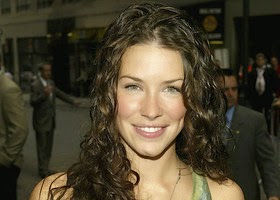
There are a few key components that bring men and women together.
Attraction tops the key element list. Physical attraction is the first cue because it is the first thing a person sees in another person. The outward appearance of a potential mate is an evolutionary mental instinct that overrides logic or intelligence. It can be the unspoken bond - - - the initial deep eye contact which some writers call the gateway to another person's soul.
Compatibility is another element. One can be physically attracted to another person, but if the couple does not share mutual interests, have similar morals, have similar goals in life - - - or nothing of substance to talk about - - - their relationship will have a weak foundation. There are some people who get together just for the sexual passion of being with another person with no long term commitment or expectations.
Respect and trust is another element that comes with time. A couple needs to have sufficient time to get to know each other. At a certain point, a person will let down their personal "guard," the space or barrier that keeps outsiders away from that person's inner secrets and desires. Once a person has the respect and trust of another, there is an inherit measure of safety and security that helps cement a true bond of friendship.
Friendship is another key element. Friendship is defined as the the emotions or conduct of friends; a closeness between friends; and a state of mutual trust and support between people. There is an odd split when it comes to friendship. Some believe experience teaches us that lovers can become friends while there is a barrier that friends cannot become lovers. Whether that concept was placed in small human villages as a means of stopping fights between males is better left to an anthropologist's thesis. But in our modern world, there is no reason why men and women who have a true bond of friendship could bloom into lovers.
For the happiest couples often say that their mate is "their best friend." The person who supports them, helps them make decisions, shares life experiences, and is there for the good times and the bad times.
Perhaps that is why many viewers could not see Kate winding up with Jack at the end of LOST. The traditional means of love were backward in their relationship.
The male audience was smitten with Kate when she first appeared on camera. She was the perky, cute, American girl-next-door icon. She was feisty, reckless, witty, and fun. Men were immediately attracted to her. And Kate knew this; she used her charms to her advantage to control men - - - from getting them close to pushing them away.
When she had her quick affair with Sawyer, it was animal lust as they were caged at the Dharma research facility. Both of them never had had a lasting relationship; they used people to their advantage in a cold, con-artist manner. Some believe Kate's actions with Sawyer was only to get Jack to save Ben (the deal she made on the beach) by forsaking any feelings towards her (such as protecting her against the Others). But Kate's relationship continued with Sawyer in the beach camp until she got to close to his secrets (the letter he wrote as a child). As such, Sawyer and Kate split.
Throughout the jungle missions, Kate was always in the background supporting Jack. There were only a few times she sided with some one else, like Locke, but overall Jack could "count" on her. But there was always a hint of trust issues. Jack knew her criminal secret, but he did not care since he believed (rightly so) that the island was a chance for everyone to start fresh with a new beginning.
Relationships are new beginnings. It is an opportunity to discard the past, learn from one's mistakes, and look for the traits that will bring out the best traits in yourself and in your partner.
So when you look at Kate sitting next to Jack in the sideways church, one could think they were never meant for each other but on the other hand their island experience and friendship was so intense and strong that deserved to wind up together.
Sunday, March 29, 2015
TOXIC BRAIN
Researchers are finding that toxic proteins, including tau, may be the cause of Alzheimer's disease.
A defect that causes a plaque build-up on the brain could cause patients to lose all memory.
But what takes the place of those lost memories.
We really do not know because Alzheimer patients lack the communication awareness to explain what is happening to them. They become a version of an adult newborn.
The Others were quite keen on using drugs to ward off the effects of the island's "illness," a disease which at least attacked the fetus and the pregnant woman. Claire was given shots by Juliet in alleged attempt to save her baby from the disease.
However, many people believe the disease was a hoax, as Desmond found out after leaving the Hatch to find his co-worker stealing his boat.
Using fear of a deadly disease to manipulate other people is a powerful weapon. You get the intended victims to surrender their free will and decision making if you offer them a cure. A snake oil salesman was the older version of this kind of con-man predator.
But what if there was some truth in the tall tale of the island illness. The island's unique electromagnetic condition could lead to neuro-chemical disruptions in normal human brain activity. This could mimic the adverse affects of sustained memory loss. It could also have the effect of causing hallucinations, illusions and paranoia (all elements shown in the show).
The island itself could have started as a laboratory to test the bio-chemical warfare tools of a prior era, but were released into this limited environment to mutate into a psycho-tropic drug. Claire was left in the deep jungle, and she turned bat crazy just like Rousseau.
What if the characters that left the island carried with them the island illness?
Could it be passed to the general population like an epidemic virus?
Or is it contained within the brain matter of each victim, so as to slowly cause them to go deeply insane?
Or the reverse, the deeply insane were the "test" subjects sent to the island to see if the illness could reverse their behavior which conventional treatments, including electro-shock, could not.
The concept that the island was a loony bin laboratory has some appeal, especially if the viewers were put into this sinister loop. But we were not let in on the real secret of the island and its past purpose.
A defect that causes a plaque build-up on the brain could cause patients to lose all memory.
But what takes the place of those lost memories.
We really do not know because Alzheimer patients lack the communication awareness to explain what is happening to them. They become a version of an adult newborn.
The Others were quite keen on using drugs to ward off the effects of the island's "illness," a disease which at least attacked the fetus and the pregnant woman. Claire was given shots by Juliet in alleged attempt to save her baby from the disease.
However, many people believe the disease was a hoax, as Desmond found out after leaving the Hatch to find his co-worker stealing his boat.
Using fear of a deadly disease to manipulate other people is a powerful weapon. You get the intended victims to surrender their free will and decision making if you offer them a cure. A snake oil salesman was the older version of this kind of con-man predator.
But what if there was some truth in the tall tale of the island illness. The island's unique electromagnetic condition could lead to neuro-chemical disruptions in normal human brain activity. This could mimic the adverse affects of sustained memory loss. It could also have the effect of causing hallucinations, illusions and paranoia (all elements shown in the show).
The island itself could have started as a laboratory to test the bio-chemical warfare tools of a prior era, but were released into this limited environment to mutate into a psycho-tropic drug. Claire was left in the deep jungle, and she turned bat crazy just like Rousseau.
What if the characters that left the island carried with them the island illness?
Could it be passed to the general population like an epidemic virus?
Or is it contained within the brain matter of each victim, so as to slowly cause them to go deeply insane?
Or the reverse, the deeply insane were the "test" subjects sent to the island to see if the illness could reverse their behavior which conventional treatments, including electro-shock, could not.
The concept that the island was a loony bin laboratory has some appeal, especially if the viewers were put into this sinister loop. But we were not let in on the real secret of the island and its past purpose.
Subscribe to:
Posts (Atom)